
The General Department of Foreign Affairs in the Transitional Council reviews the developments in political events and mechanisms for developing administrative performance

sadaalhakika
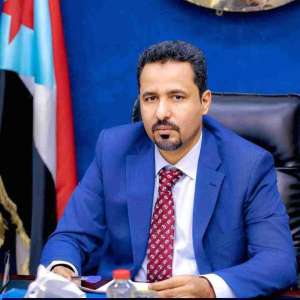
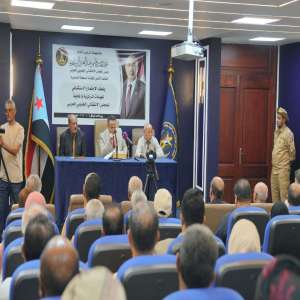
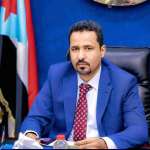
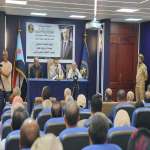
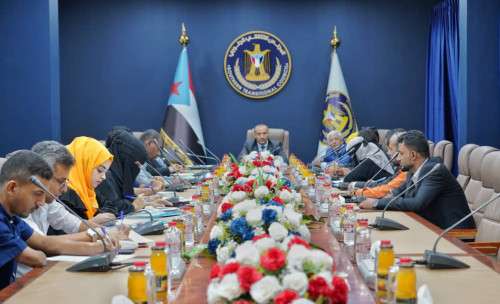
On Tuesday, the General Department of Foreign Affairs of the Southern Transitional Council held its periodic meeting in the capital, Aden, for the first half of November, Chaired by Anis Al-Sharafi, Deputy Head of the General Department of Foreign Affairs.
At the outset of the meeting, Al-Sharafi conveyed the greetings of President Commander Aidaroos Qassem Al-Zubaidi, President of the Southern Transitional Council, Deputy Chairman of the Presidential Leadership Council, reviewing the most important developments in the southern national, regional and international arena, and the Southern Transitional Council's position of them, as well as the military situation on the border fronts, the response to the Houthi terrorist militia attacks, and the efforts made by the southern armed forces with international partners in combating terrorism.
Al-Sharafi affirmed the Southern Transitional Council's keenness on the path of a political solution, and that this keenness does not contradict with following the path of military resolution to defend civilians in the south, and to confront the continuous escalation of the terrorist Houthi militia and its aggression against civilian objects and economic installations, and the threat to international maritime navigation in the Gulf of Aden, Bab Al-Mandab and the Red Sea. 
Al-Sharafi reaffirmed the position of the Southern Transitional Council regarding the role and status of the south, its national cause and the interests of the people of the south, stressing that there is no peace or stability without the south and its national cause assuming their position as a fundamental issue and a fundamental pillar for achieving peace in the south, Yemen and the region, noting the need to develop a special framework for the cause of the people of the south during the negotiations to stop the war.
During the meeting, Al-Sharafi pointed out the importance of the role that foreign offices and their representatives should play in the mandate countries in conveying and embodying the voice, demands and aspirations of the people of the south, and activating and developing their work abroad so that they are in a state of full support for the people of the south and their national cause.
In its meeting, the General Department of Foreign Affairs listened to a briefing by the deputy head of the internal Southern National Dialogue team, Abd al-Salam Qasim Massaad, about the team's activities, and the results of the meetings it held with the southern political and social components, forces, and figures, trade unions, and professional components from various segments of southern society, for foreign affairs and its representatives to undertake conveying the results of the dialogues to the international community, noting that the adherence of the people of the south with all its components to the approach and culture of dialogue proves that the south today rejects the language of hate and is a catalyst for democratic values, stability and social, regional and international peace.
The meeting reviewed the training plan for foreign affairs, it also listened to the reports of the Ministry of Foreign Affairs representatives on political and diplomatic efforts and activities, and the results of their contacts and external meetings.
The meeting stressed the need to intensify diplomatic efforts, prepare and train leaders and political and administrative staff, and develop their skills and capabilities, with the aim of raising job performance and strengthening the role and status of southern diplomacy.
The meeting also discussed a number of topics on its agenda, on the activities of the foreign affairs departments, offices and representatives, and took the necessary measures and decisions in their regard.